
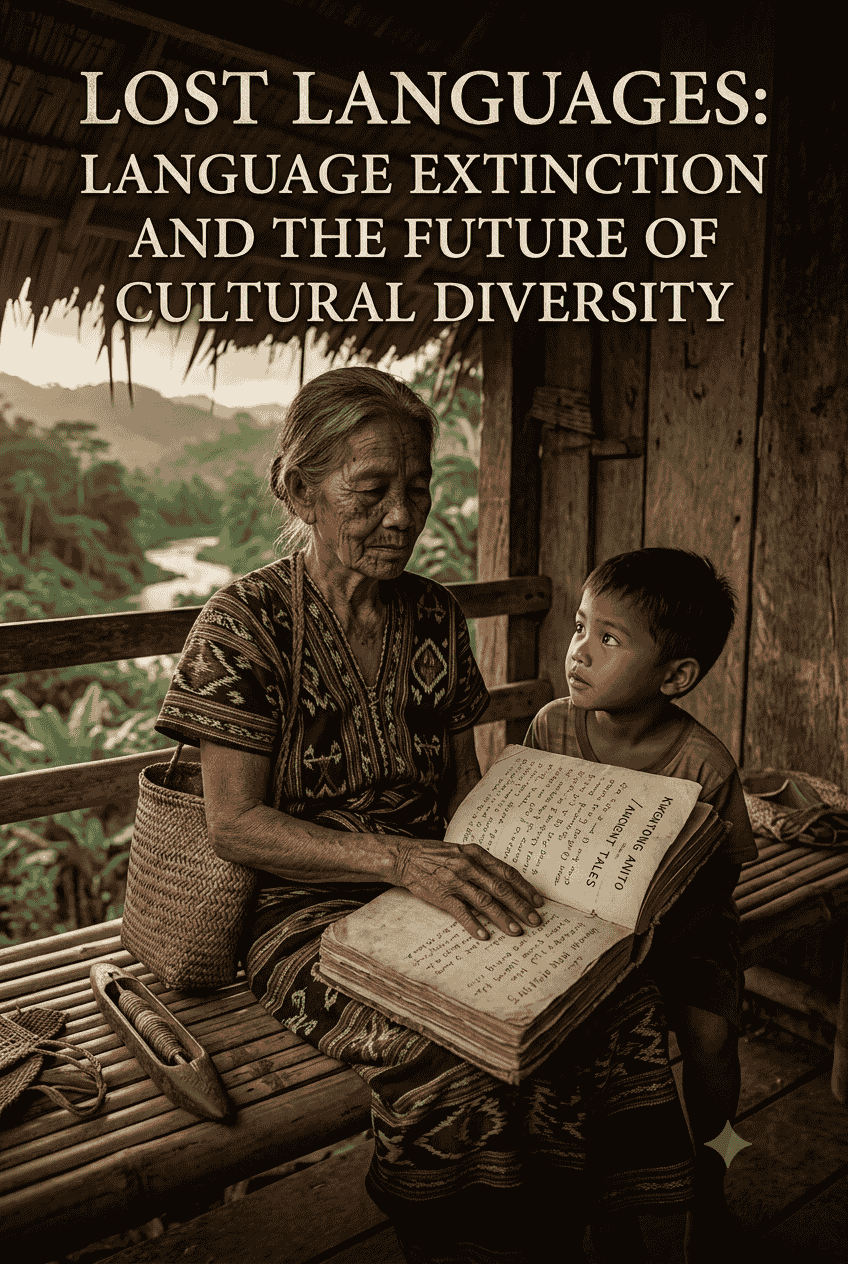
Lost Languages
Language Extinction and the Future of Cultural Diversity
DOI:
https://doi.org/10.62596/w1r9m397Keywords:
Language Extinction, Cultural Diversity, Language PreservationAbstract
Language extinction threatens cultural diversity by eroding indigenous knowledge, identity, and historical memory embedded in ancestral languages. Globalization and shifting language practices accelerate this decline, while education, technology, and community initiatives offer promising strategies for language preservation and revitalization. Protecting endangered languages is essential for sustaining cultural heritage, ecological knowledge, and humanity's diverse perspectives for future generations.
References
Bowern, C. (2022). Drivers of language loss. Nature Ecology & Evolution, 6(2), 132–133. https://doi.org/10.1038/s41559-021-01621-x DOI: https://doi.org/10.1038/s41559-021-01621-x
Bradley, D., & Bradley, M. (2019). Language endangerment. In Endangered Languages in the 21st Century (p. 119). DOI: https://doi.org/10.4324/9781003260288-10
Bromham, L., Dinnage, R., Skirgård, H., Ritchie, A., Cardillo, M., Meakins, F., ... & Hua, X. (2022). Global predictors of language endangerment and the future of linguistic diversity. Nature Ecology & Evolution, 6, 163–173. DOI: https://doi.org/10.1038/s41559-021-01604-y
Harrison, K. D. (2007). When languages die: The extinction of the world's languages and the erosion of human knowledge. Oxford University Press.
UNESCO. (2021). The International Year of Indigenous Languages. UNESCO Publishing. https://www.unesco.org/en/articles/international-year-indigenous-languages
Downloads
Published
Issue
Section
License
Copyright (c) 2026 ARTICULATOR GAZETTE

This work is licensed under a Creative Commons Attribution 4.0 International License.
How to Cite


