
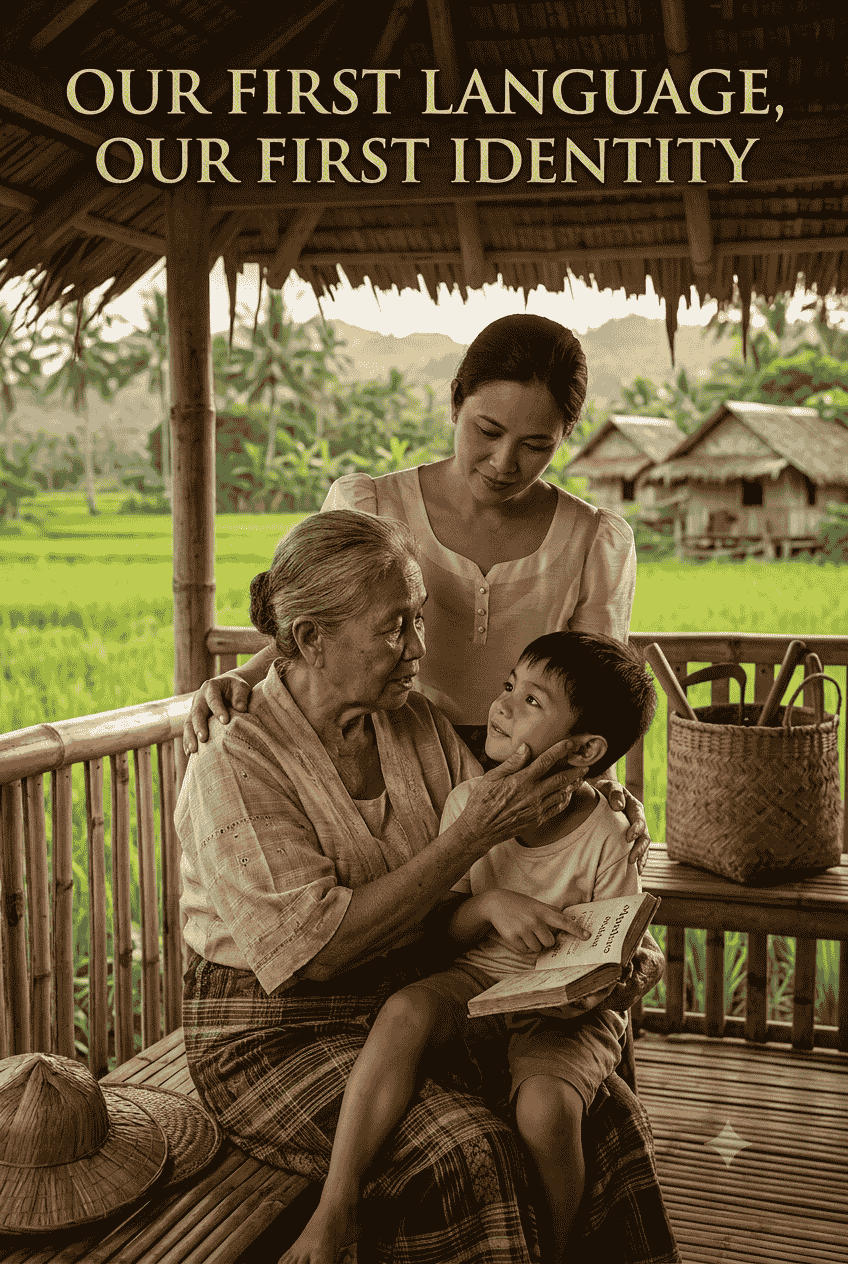
Our First Language, Our First Identity
DOI:
https://doi.org/10.62596/2ensrh19Keywords:
First Language, Cultural Identity, Language PreservationAbstract
Language is a fundamental foundation of personal and cultural identity, shaping how individuals connect with their families, communities, and heritage. This article highlights the importance of preserving first languages amid globalization, emphasizing the roles of education, families, and technology in sustaining linguistic diversity and cultural continuity. Maintaining one's mother tongue alongside multilingual competence strengthens identity while safeguarding valuable cultural knowledge for future generations.
References
Bowern, C. (2022). Drivers of language loss: Macroecology. Nature Ecology & Evolution, 6(2), 132–133. DOI: https://doi.org/10.1038/s41559-021-01621-x
Bradley, D., & Bradley, M. (2019). Language endangerment. In Endangered Languages in the 21st Century (p. 119). DOI: https://doi.org/10.4324/9781003260288-10
Bromham, L., Dinnage, R., Skirgård, H., Ritchie, A., Cardillo, M., Meakins, F., ... & Hua, X. (2021). Global predictors of language endangerment and the future of linguistic diversity. Nature Ecology & Evolution, 6, 163–173. DOI: https://doi.org/10.1038/s41559-021-01604-y
Harrison, K. D. (2007). When languages die: The extinction of the world's languages and the erosion of human knowledge. Oxford University Press.
UNESCO. (2021). The International Year of Indigenous Languages. UNESCO Publishing. Retrieved from https://www.unesco.org/en/articles/international-year-indigenous-languages
Downloads
Published
Issue
Section
License
Copyright (c) 2026 ARTICULATOR GAZETTE

This work is licensed under a Creative Commons Attribution 4.0 International License.
How to Cite


